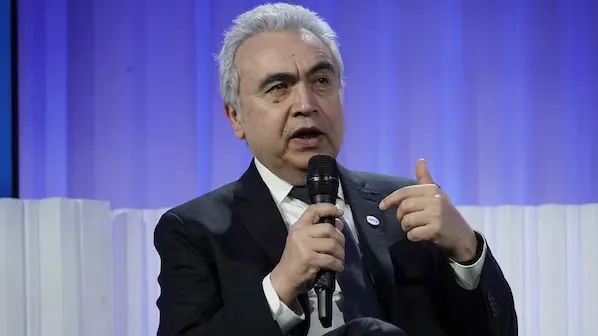
The International Energy Agency (IEA) has projected that Nigeria's investment in its energy sector could double within the next five years. This optimistic outlook follows Nigeria's recent admission as an associate member of the IEA, a significant milestone for the country, which is Africa's largest oil producer. Faith Birol, the Executive Director of the IEA, made this announcement during a press briefing in Abuja, emphasizing that Nigeria's new status could serve as a catalyst for attracting foreign investments into its energy sector.
Nigeria was officially welcomed as the 14th associate member of the IEA in July, a decision that received unanimous support from existing member states, including the United States, Germany, and Italy. This makes Nigeria the first member of the Organisation of Petroleum Exporting Countries (OPEC) to join the IEA, marking a pivotal moment in the country's energy landscape.
Birol noted that this new arrangement would provide Nigeria with a stronger voice in global energy policy discussions, which is crucial as the world grapples with energy supply challenges exacerbated by geopolitical tensions. He pointed out that recent disruptions in energy supply routes, particularly due to the ongoing conflicts in Ukraine and Iran, have prompted countries to reassess their energy partnerships and supply chains.
"Countries have been looking for partners they can trust, especially in light of the supply disruptions we have witnessed recently," Birol stated. He highlighted that Nigeria is seen as a credible energy supplier, particularly following the successful operations of the Dangote refinery, which has played a significant role in alleviating fuel supply pressures in Europe. The refinery, which processes approximately 700,000 barrels of crude oil daily, has become a vital asset in the global energy market.
Birol's remarks underscore the importance of trust in energy partnerships. He stated, "The most scarce commodity is not oil, not gas, not uranium, not lithium. It is trust. Countries are looking for partners they can rely on." This sentiment reflects a broader trend in the global energy market, where reliability and stability have become paramount in the wake of recent crises.
Looking ahead, Birol expressed his ambition to see Nigeria's energy investments at least double within five years. He believes that the IEA's support will be instrumental in achieving this goal. The IEA and Nigeria are expected to sign a joint work programme that will outline cooperation in various areas, including natural gas, electrification, clean cooking, energy efficiency, and energy data development.
In addition to enhancing investment opportunities, this partnership aims to improve Nigeria's energy data collection and reporting systems, which are essential for informed decision-making and policy formulation. Accurate data is critical for attracting foreign investments, as it provides potential investors with the necessary insights into the country's energy landscape.
The IEA's support comes at a time when Nigeria is seeking to bolster its energy sector amid ongoing challenges, including inadequate infrastructure and the need for diversification away from oil dependency. The Nigerian government has been making efforts to attract investments in renewable energy and other sustainable energy sources, recognizing the need to transition towards a more resilient energy future.
As Nigeria embarks on this new chapter in its energy journey, the implications for the country's economy and its role in the global energy market are significant. The potential doubling of energy investments could lead to job creation, technological advancements, and improved energy access for millions of Nigerians.
Moreover, this development aligns with Nigeria's broader economic goals, as the country seeks to enhance its energy security and reduce its reliance on imported fuels. By positioning itself as a key player in the global energy landscape, Nigeria aims to leverage its vast natural resources to drive economic growth and development. Nigeria's admission as an associate member of the IEA marks a transformative moment for the country's energy sector. With the potential to double its energy investments in the coming years, Nigeria is poised to strengthen its position as a reliable energy partner on the global stage. As the world navigates the complexities of energy supply and demand, Nigeria's role in shaping the future of energy is more critical than ever.