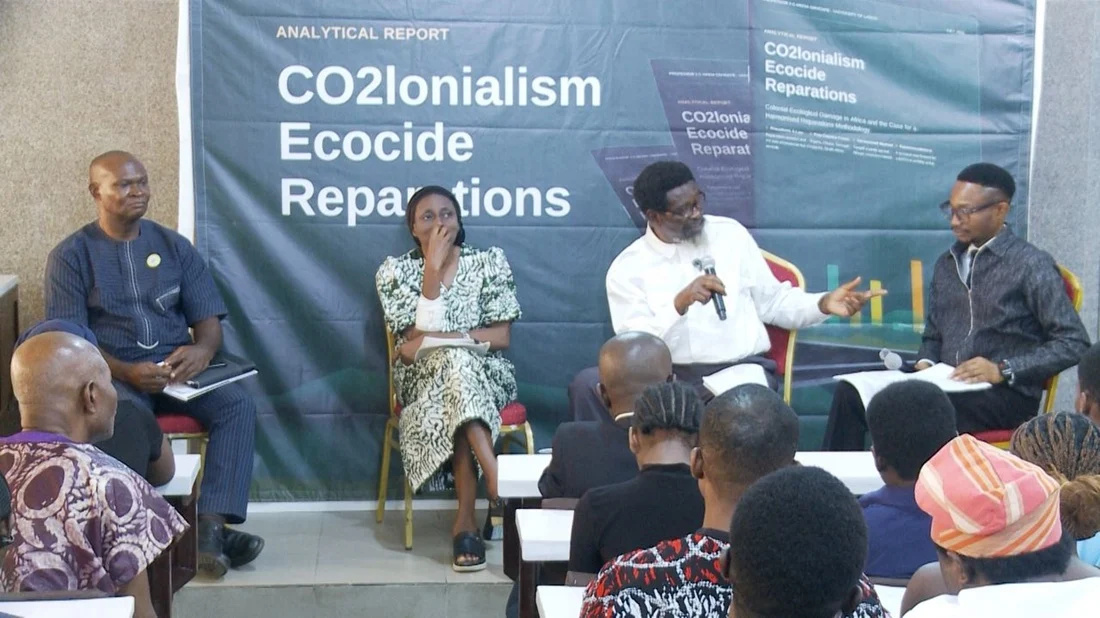
A groundbreaking report from the University of Lagos has shed light on the extensive environmental repercussions of British colonial rule in Africa, urging that these ecological damages be included in ongoing reparations discussions. Titled 'CO2lonianism, Ecocide, Reparations,' the report posits that the long-lasting ecological harm inflicted on African nations during colonial rule represents a significant category of damage, distinct from the humanitarian impacts of the slave trade.
The lead author, Professor J. G. Nkem Onyekpe, PhD, who heads the Department of History and Strategic Studies at the University of Lagos, emphasized the need for a comprehensive valuation of this ecological damage. He noted that previous attempts at valuing resources appropriated from the Global South through unequal exchanges have yielded figures exceeding $10 trillion annually, as evidenced by a peer-reviewed study from 2022. Onyekpe argues that if this valuation approach is applied to the full duration of colonial rule across affected African states, the total could reach hundreds of trillions of dollars.
The report was presented at a press conference on August 28, 2026, attended by a diverse audience of academics, legal experts, and public activists. Following its presentation, the report has been formally submitted to the African Union’s newly established sub-commissions, namely the Committee of Experts on Reparations (AUCER) and the Legal Reference Group on Reparations (AULER). These bodies are tasked with developing a unified methodology for evaluating and advancing a common African position on reparations claims, particularly in light of the AU's Decade of Justice and Reparations from 2026 to 2035.
One of the report's key findings highlights the significant relationship between land degradation and farmer livelihoods in Kanungu District, Uganda. Local officials and farmers attributed the degradation primarily to deforestation, which has led to severe consequences such as hunger and famine. This case underscores the urgent need for reparations that address not only human suffering but also the ecological devastation that has resulted from colonial practices.
The legal landscape for such claims has shifted dramatically since 2021, creating a unique opportunity for African nations to pursue reparations. Notable developments include the adoption of a working legal definition of ecocide by the Independent Expert Panel and the establishment of binding legal instruments by the Council of Europe and the European Union. Furthermore, the African Union's decision in July 2025 to form an ad hoc committee to classify the massive destruction of environmental ecosystems as a crime lends institutional support to the report's premise.
Ogunlade Olamide M., an Associate Director at the Centre for Awareness on Justice and Accountability (CAPPA), remarked on the report's significance, stating that colonial reparations must encompass the ecological destruction that has shaped Africa's climate vulnerability. He emphasized that the consequences of colonial practices extend beyond the immediate loss of life and resources, impacting the continent's environmental health and sustainability.
The report also references a landmark case from the 1990s, Certain Phosphate Lands in Nauru, where a formerly colonized state successfully brought a claim against Australia for environmental devastation caused by colonial-era phosphate mining. This precedent serves as a potential template for African nations seeking to address the extensive ecological harm inflicted during colonial rule.
Dr. Karibi-Whyte, a legal expert familiar with the report, noted that the Nauru case demonstrates that such claims are grounded in established international law. He highlighted that Africa is now poised to build on this precedent to address a far greater scale of environmental harm.
The submission of this report comes at a time when the reparations movement is gaining momentum, with the African Union declaring 2025 as the Year of Reparations. The establishment of AUCER and AULER mechanisms aims to guide the continent's strategy in pursuing reparations claims, emphasizing the importance of addressing ecological damage as part of restorative justice for African peoples.
The authors of the report hope it will serve as a crucial document in framing environmental repair as an essential component of reparations. By acknowledging the ecological costs of colonialism, the report advocates for a more comprehensive understanding of the debts owed to African nations, not only in terms of human lives lost but also in the long-term environmental consequences that continue to affect the continent today.
As discussions surrounding reparations evolve, the inclusion of environmental considerations may pave the way for a more equitable approach to addressing the injustices of the past. The report from the University of Lagos stands as a significant contribution to this ongoing dialogue, urging stakeholders to recognize the full scope of colonial impacts on Africa's ecological landscape.