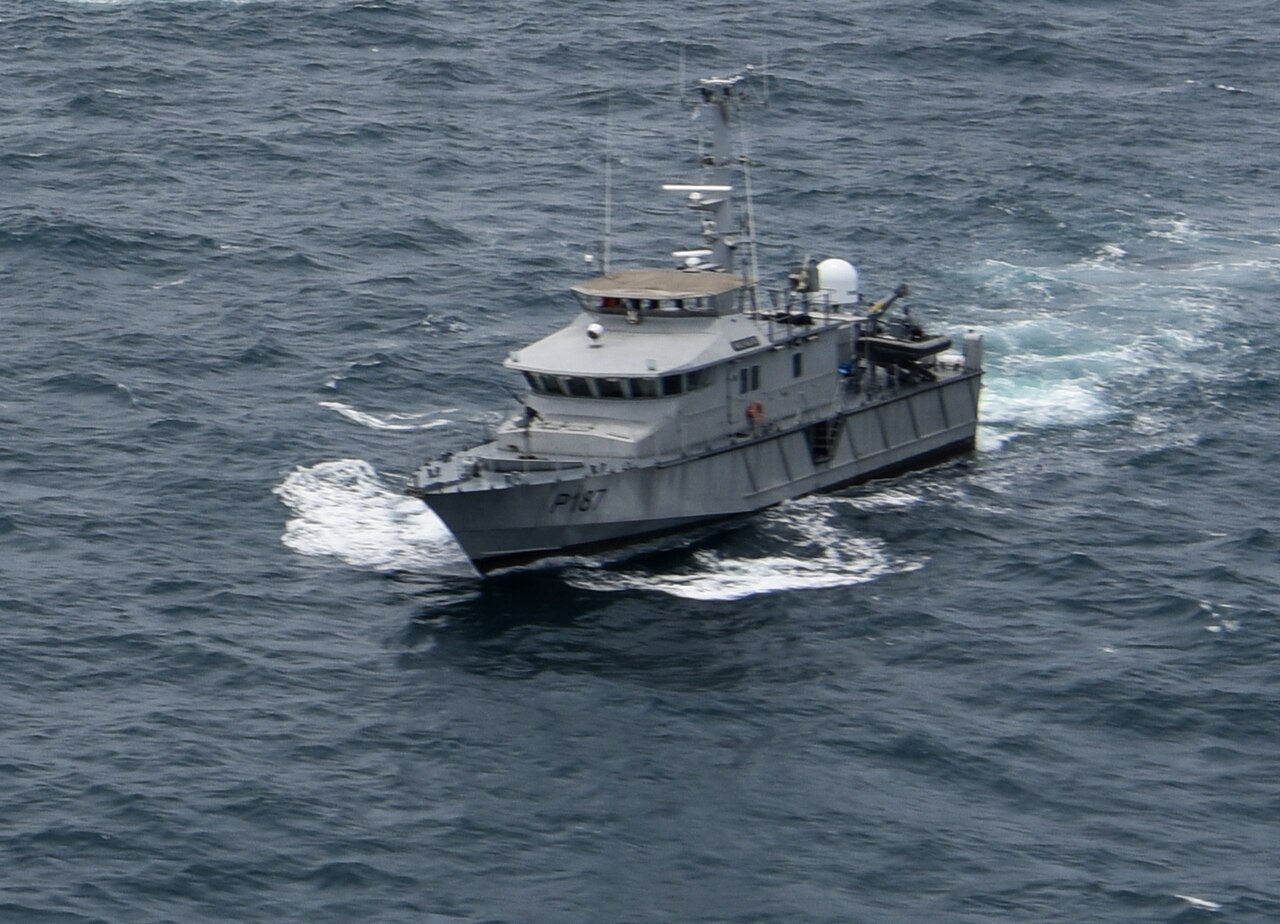
The Nigerian Navy’s latest Rivers State haul is a small number with a large political job. On Friday, personnel of Nigerian Navy Ship (NNS) SOROH under Operation DELTA SENTINEL deactivated two illegal refining sites at Ogbogolo Community in Ahoada West Local Government Area. The operational report released in Abuja on Sunday put the recovery at about 28,520 litres of illegally refined Automotive Gas Oil and 5,280 litres of stolen crude — roughly 33,800 litres in total — plus 48 sacks, three dugout pits, two kegs and three cooking drums. Perpetrators fled; no arrests were announced. That is the honest ledger of one raid. The desk test is whether litre counts like this still map onto Nigeria’s production, export and fiscal story, or whether they have become a security press cycle that runs parallel to the oil economy.
Director of Naval Information Capt. Abiodun Folorunsho framed the Ogbogolo action as intelligence-led disruption of the storage and processing kit that keeps theft alive after previous clearances. Chief of the Naval Staff Vice Adm. Idi Abbas’s public instruction to formations is consistent with that doctrine: deny criminal networks freedom of action, protect critical oil and gas infrastructure, and keep pressure high enough that illegal sites cannot quietly reboot. The same week’s wider Defence Headquarters update on Operation Delta Safe put the Niger Delta disruption in a larger stack — more than 260,000 litres of suspected stolen crude recovered across recent actions, including about 182,000 litres uncovered at Bethel Creeks in Rivers on 22 September and an earlier Aworkiri recovery of about 87,000 litres on 8 September. Navy and joint-force messaging now treats dugout pits and transfer hoses as the target set, not only the product left in them.
Readers should split three categories that official statements often blend. First is tactical success: a site found, product seized, infrastructure broken. Ogbogolo qualifies. Second is network degradation: arrests, prosecutors, financiers, barge logistics and the buyers who turn stolen crude into cash. The Ogbogolo report, by its own terms, does not claim that second category. Third is macroeconomic effect: barrels that reach official terminals, export liftings, federation revenue and the domestic refining mix. A 33,800-litre seizure is real enforcement. It is also a fraction of a day’s legitimate production when Nigeria talks in hundreds of thousands of barrels. Treating every press release as proof that theft is “solved” confuses a creek raid with a balance-sheet repair.
That distinction matters while the federal economic story is already crowded. Domestic petrol supply, legacy NNPC plant silence, pump-price swings and labour pressure on wages are separate fights from creek storage pits — but they share one political sentence: Nigeria must squeeze more value from oil and gas under insecurity and theft. Navy language about maritime domain awareness and host-community collaboration is the right operational vocabulary for Delta Sentinel. It does not, by itself, answer how much stolen volume still moves on nights when no ship is in the creek, or how quickly operators rebuild pits after deactivation. The Bethel Creeks and Aworkiri sequence — large finds weeks apart in the same operational theatre — is evidence of persistence on both sides: security forces returning, and illicit infrastructure attempting to reappear.
What to watch next is narrower than another litre total. Watch whether subsequent naval and Delta Safe updates name arrests, charges and asset seizures tied to the same corridors, not only product volumes. Watch whether production and export figures attributed to Rivers and neighbouring producing areas move in a way that matches the claimed denial of criminal footholds. Watch whether host-community cooperation is described with measurable tip-offs and sustained site denial, or only as a closing paragraph. And watch the gap between diesel and crude recovered at illegal camps and the formal midstream–downstream ledger that already shapes pump prices and fiscal hope. Until those lines connect in public data, Ogbogolo is best read as a competent raid in an unfinished campaign — not as the end of oil theft season.