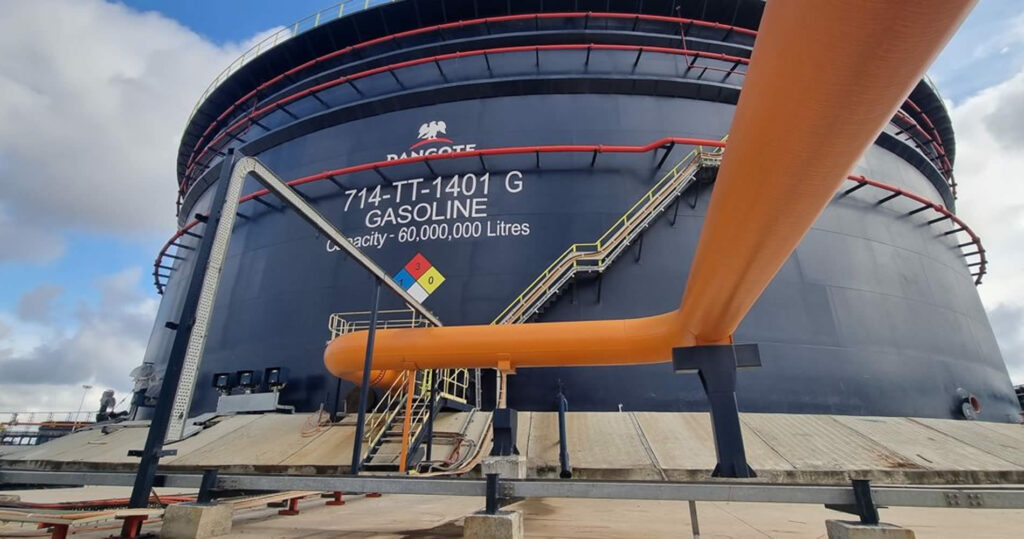
The Dangote Petroleum Refinery has announced an increase in the price of Automotive Gas Oil (AGO), commonly referred to as diesel, raising the gantry price to N1,850 per litre. This adjustment, effective from 12:00 a.m. on Friday, represents a N100 increase from the previous price of N1,750 per litre, amounting to a 5.7 percent rise. This marks the second increase in less than a month, reversing a previous price cut made in August when the refinery reduced its diesel price by N80 to N1,570 per litre.
The recent price hike comes at a time when global oil prices are on the rise, with Brent crude trading at approximately $93.93 per barrel and West Texas Intermediate at $89.40 per barrel as of Thursday afternoon. The increase in crude prices has been attributed to heightened geopolitical tensions, particularly in the Middle East, and concerns over potential disruptions to oil supply chains. Additionally, operational disruptions in refining capacities in regions such as the Middle East and Russia have further strained the availability of refined products, exacerbating the situation in Nigeria’s downstream market.
For Nigerian marketers, the latest price adjustment by Dangote could lead to increased replacement costs, which may subsequently elevate diesel prices across various depots and distribution channels. This is particularly concerning for businesses that heavily rely on diesel for operations, including manufacturers, transport operators, and logistics companies. If these costs are passed down the supply chain, it could lead to higher operating expenses for these sectors, impacting their overall profitability and potentially leading to increased prices for consumers.
The Dangote refinery's pricing strategy has become increasingly significant for marketers, especially as its rates remain competitive with other depots in Lagos. The refinery's pricing decisions are closely monitored, as they often set the tone for diesel pricing across the country. This latest increase highlights the ongoing vulnerability of Nigeria's downstream market to fluctuations in global crude prices, despite the country's efforts to enhance its domestic refining capabilities.
The implications of this price increase extend beyond just the immediate cost of diesel. For many businesses, especially in the manufacturing and transportation sectors, diesel is a critical component of their operational framework. The increased cost of diesel could lead to a ripple effect, where businesses may have to adjust their pricing strategies to accommodate the higher fuel costs, potentially leading to inflationary pressures in the economy.
Moreover, the Nigerian economy has been grappling with various challenges, including inflation and currency depreciation, which have already strained consumer purchasing power. The rise in diesel prices could further exacerbate these economic challenges, leading to higher costs of goods and services across the board. As diesel prices rise, consumers may find themselves facing increased transportation costs, which could lead to higher prices for essential goods.
The situation is further complicated by the fact that Nigeria has been striving to boost its domestic refining capacity to reduce reliance on imported refined products. The Dangote refinery, which is touted as one of the largest in Africa, was expected to play a pivotal role in this regard. However, the current price adjustments highlight the ongoing challenges faced by the Nigerian downstream market in achieving self-sufficiency in fuel production.
As the global oil market remains volatile, it is crucial for stakeholders in Nigeria to monitor these developments closely. The interplay between global crude prices and local market dynamics will continue to shape the landscape of Nigeria's energy sector. Businesses and consumers alike will need to brace for potential fluctuations in fuel prices, which could have far-reaching implications for the economy. the recent increase in diesel prices by Dangote Petroleum Refinery underscores the interconnectedness of global oil markets and local economic conditions. As Nigeria navigates these challenges, the focus will remain on how to stabilize fuel prices while fostering a more resilient domestic refining sector. The coming weeks will be critical in determining the trajectory of diesel prices and their impact on the broader Nigerian economy.